We don’t like disappointments. Do we? Let’s not lie. No one likes disappointment, even the word “disappointment” gives us negative vibes. But no matter how much we hate disappointment, it generally meets us more often than we wish. Where aren’t we disappointed? In our careers, in businesses, in making financial decisions, in relationships, in almost everything.
So, as the title says, how can we avoid disappointment? To be very true, we cannot avoid disappointments. I am really sorry for the misleading title but it was the only way I could bring you here and tell you this very important thing that even if we cannot avoid disappointments we can greatly decrease the effect of it. And before we begin to see how, let us first understand where disappointments arise in the first place.According to Wikipedia, “disappointment is the feeling of dissatisfaction that follows the failure of expectations or hopes to manifest.”
In terms of psychology, it is said that “whenever we make a decision we expect a likely outcome of that decision and if the outcome is better than our assumption we are surprised and when it is worse than our expectation, we are disappointed.”
I comprehend this in a simple term as we feel disappointed when unexpected wrong things happen instead of happening the assumed or unexpected good things.
So, why most of the time unexpected bad things happen, and why only a few times things happen as we assume or why even more rarely unexpected good things happen?
The answer lies in the awful misunderstanding of probability in our daily lives. Whenever we make decisions, we assume that the outcome will be what we have already assumed it to be. This is an easy way to cause disappointment.
Nothing could be farther from the truth. Let us understand this practically: when we throw a dice there are six probable outcomes, all equally likely i.e. 1/6. We may assume to get a 6 but this has no effect on the likely probability of all the six probable outcomes. In fact, the probability of 6 not coming is highly likely i.e. 5/6. So, just because we are assuming something to happen after an action, the probability of its happening doesn’t improve.
In the fascinating book, Thinking in Bets, Annie Duke, a former poker player says that we often fail to see that each decision has a range of possible outcomes rather than a single outcome and all the outcomes have a different probability of occurrences. It seems complex. It slightly is, that’s why most people won’t get it right. You can. Continue reading.
If we can model this decision-making process in a dart game we can understand the various aspects pretty easily. Let’s assume a game of dart. We say the arrow, a decision arrow which we throw on the dart which we say a decision outcome dart with three probable hitting areas; assumed, unexpected good and unexpected bad ( three for simplicity only, there are uncountable numbers of outcomes with varying probability in real-life decision making).
For the decision arrow, we throw in life, the outcome decision dart somehow looks like this, although never we can see such crisp boundaries between the outcomes.
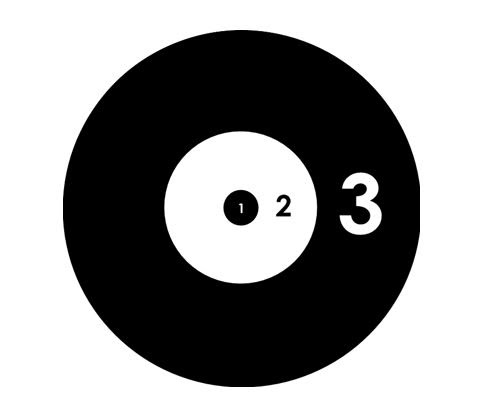
Area numbered as 3 is the unexpected bad outcome, number 2, the normally assumed outcome, and number 1, the unexpectedly good outcome. Assuming that every time we can successfully hit this dart with our decision arrow, with little common sense, we can easily say that we are more likely to hit area 3 than area 2 than area 1. The likely probability of outcomes are as follows-
Area 3 > Area 2 > Area 1
After making a decision we only see the area numbered 2 not realizing that there exists an outcome that is more probable to happen than what we have assumed. And when our decision arrow hits area 3, we are disappointed and dishearten. We start to blame our bad luck and gods and feel that we have been cursed. It’s absolutely nothing like that. It is just that we were not able to see all the probable outcomes before assuming the most likely one.
The question arises is why we have given such skewed probability to three outcomes. Why area 1 is smaller than area 2 and why area 2 is smaller than area 3. Remember we have just said that in a throw of dice the probability we do not get a six is 5/6. So, when we put this in a dart, it will look like this;
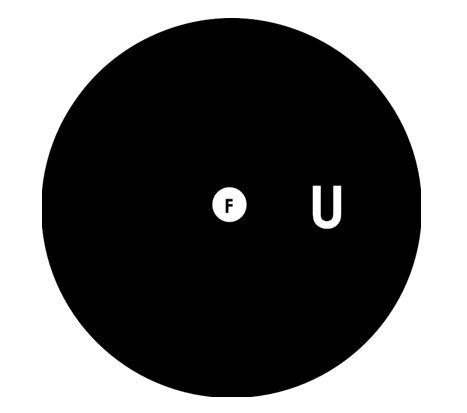
As we can see just in an example of 6 probable outcomes and taking one likely and all unlikely outcome we get such skewed outcome distribution dart. The decisions we make in life have much more probable outcomes than six and thus we can say that the distribution will be likely even more skewed than we may have assumed.
So, after this brain-teasing mathematics, you might have got some idea of avoiding some disappointment from life. You might say that applying such maths in daily lives doesn’t make sense but it is not only me saying all this. Mother promise. In behavioral science, a relatively new area of scientific interest such topics are more often than we might think.
The way of avoiding the effect of disappointment is to see the decision we are making and what are all the outcomes that may happen whether it is likely or unlikely, highly likely, or highly unlikely.
When we know most of the outcomes either good ones or bad ones, we may not get that much disappointed. Remember the definition of disappointment, we are only disappointed when something bad happens which we have not thought in the first place. No, I am not saying to be pessimist and hope for the bad, what I am saying to know with an open mind that things may go wrong. As Murphy’s Law says, “Anything that can go wrong will go wrong”. I would like to add ‘at most of the time’ to this quote as I think this quote is an exaggeration to what I want to state here.
We need to be humble in assuming likely outcomes of our decisions no matter in which field we are making a decision carefully thinking the likely and unlikely outcomes and be prepared to face both bad and good ones, in doing so we are pretty less likely to be disappointed.
Good luck,
 Shahrukh Ahmad
Leave a comment